Key Takeaways
- CNC milling in China offers advanced technology, rapid turnaround, and competitive pricing, making it a strategic choice for global precision manufacturing.
- Leading Chinese suppliers utilize state-of-the-art 3- to 5-axis machines, skilled engineers, and international quality certifications to deliver high-precision components across industries.
- Automotive, aerospace, and electronics sectors benefit from China’s expertise in producing tight-tolerance, complex parts at both prototype and mass-production scales.
- Successful CNC milling projects in China rely on clear specifications, detailed CAD files, verified quality control, and proactive communication with suppliers.
- Choosing a reliable CNC milling partner involves evaluating certifications, production capabilities, communication, and support for effective global collaboration.
China has established itself as a global leader in precision CNC milling services, combining state-of-the-art 3- to 5-axis machining centres with highly skilled engineers to deliver components with tolerances as tight as ±0.01mm for demanding industries. Chinese manufacturers leverage advanced automation, 24/7 production capabilities, and streamlined supply chains to offer competitive pricing up to 30% lower than Western alternatives whilst maintaining international quality certifications including ISO 9001 and AS9100. Companies seeking CNC Milling China services benefit from rapid turnaround times as short as 5-7 days, comprehensive material sourcing, and multilingual project management support, making China an ideal partner for automotive, aerospace, and electronics manufacturers requiring high-precision components at both prototype and production volumes.
What Is CNC Milling?
CNC milling uses computer numerical control systems to remove material from a solid workpiece, shaping it into a precise component. Operators input digital instructions from CAD files which automated machines then follow to cut, drill, and finish parts with high accuracy. Three- to five-axis machines process metals, plastics, and composites for industries like automotive, aerospace, and electronics. Advanced CNC milling achieves tolerances within ±0.01 mm for critical applications, according to standards set by ISO and ASME.
In China, CNC milling facilities operate high-speed equipment with automated tool changers and real-time quality monitoring. These shops run 24/7 in controlled environments to produce consistent parts at scale. Engineers collaborate with global clients using online platforms for design validation and rapid prototyping. CNC milling supports complex geometries, tight specifications, and quick shifts between production batches, making it central to modern precision manufacturing.
Why Choose CNC Milling in China?
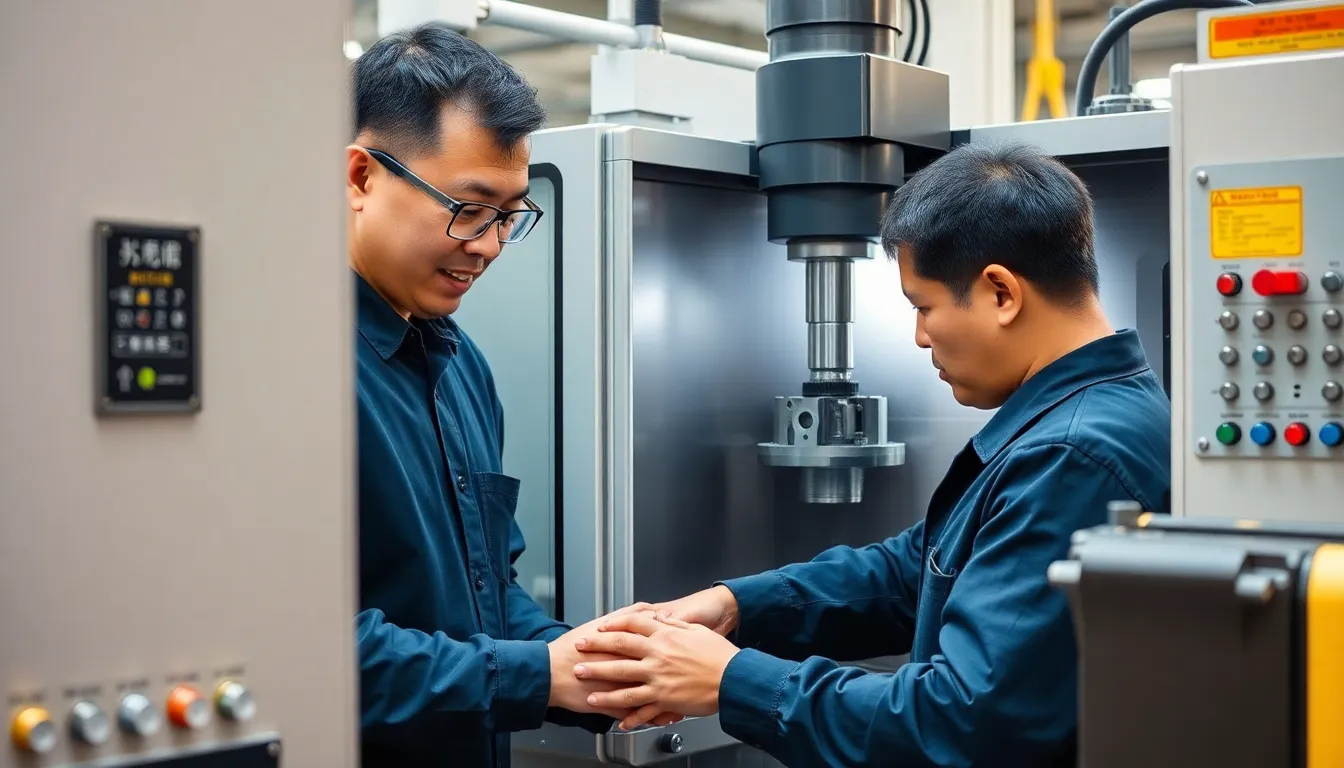
CNC milling in China offers precise manufacturing with lead times as short as 5 days and competitive costs for global businesses. International certifications, advanced automation, and skilled teams drive consistent part quality for industries like auto and electronics.
Cost-Effective Manufacturing
Chinese CNC milling production leverages large-scale factories and streamlined logistics to achieve low unit costs, especially for orders above 500 parts. Batch runs benefit from local material sourcing, which reduces both transportation and procurement expenses. The Chinese CNC supply chain combines workforce efficiency and high-capacity utilization, offering rates up to 30% lower than Western firms for aluminum or steel components. Clients in aerospace and consumer tech regularly cite China’s cost advantage for manufacturing prototypes and serial parts with complex geometries and fine tolerances.
Advanced Technology and Equipment
CNC milling facilities in China operate with high-speed 3- to 5-axis machining centers from global brands such as DMG MORI and Haas. Factories standardize digital workflows that link CAD modeling, CAM programming, and inspection, which ensures repeatable accuracy for custom hardware or electronic enclosures. Automation with robotic arms and real-time quality monitoring boosts throughput and traceability in continuous production environments. Companies sourcing from China gain access to rapid prototyping, micro-machining, and surface finishing under ISO 9001, ISO 13485, and automotive quality systems.
Skilled Workforce
Chinese CNC manufacturers employ machinists and engineers trained in mechanical engineering and automation, with many holding vocational certificates or technical degrees. Production teams maintain expertise in tight-tolerance operations, such as ±0.01 mm for engine parts and medical implants. Multilingual project managers support international clients from quoting to delivery and provide DFM (Design for Manufacturability) guidance for mass production. Continuous upskilling programs help workers stay current with evolving machining practices and digital manufacturing technologies.
Key Industries Using CNC Milling in China
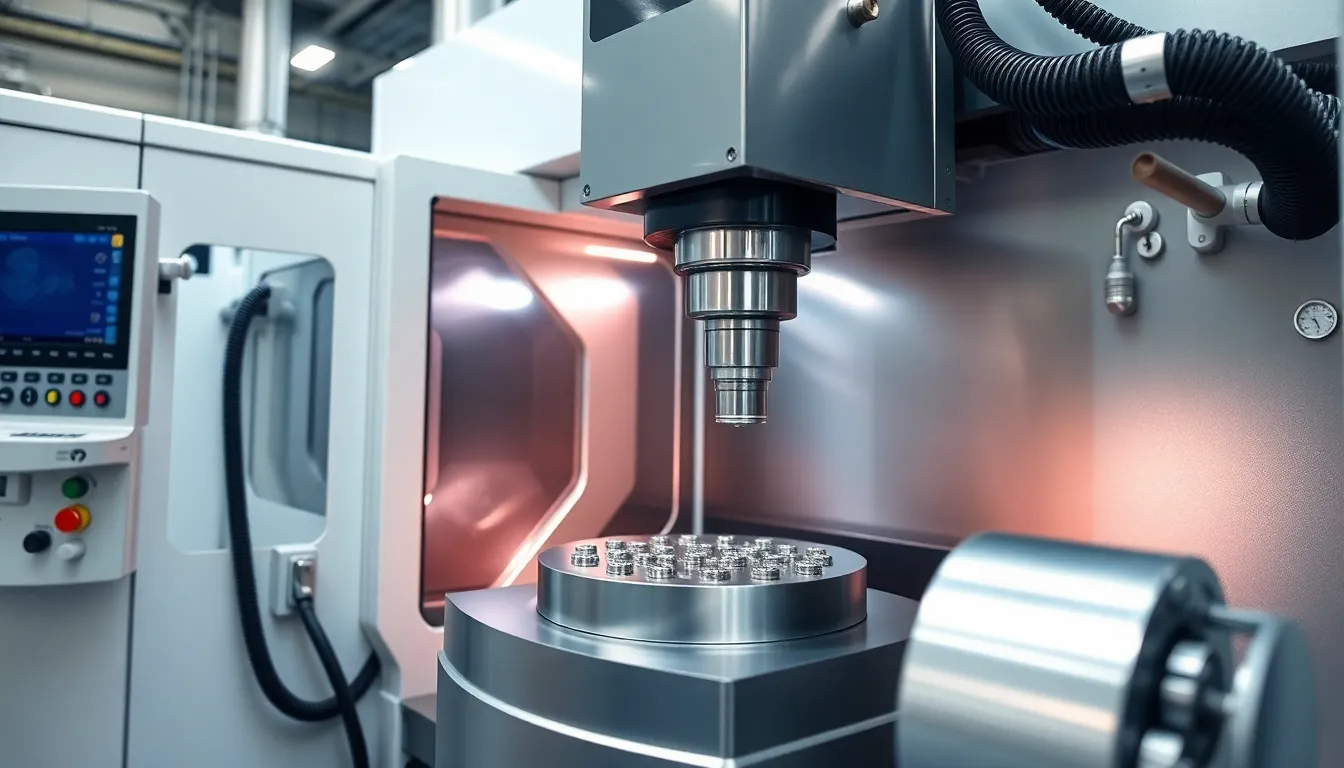
CNC milling in China supports production for key sectors where precision, advanced technology, and volume output drive global supply chains.
Automotive
CNC milling shapes automotive engine blocks, suspension assemblies, and custom transmission components in China for global vehicle manufacturers. Machine shops use advanced 5-axis CNC machining centers to produce high-strength alloy parts with tolerances down to ±0.01 mm, meeting ISO/TS 16949 standards. Production spans prototype to mass volume, enabling electric vehicle battery casings, lightweight chassis parts, and gear housings. Car makers such as BYD and Geely integrate these components into passenger vehicles and commercial fleets. Factories offer quality inspection with CMMs and deliver lead times as short as 7 days for urgent development cycles.
Aerospace
CNC milling produces aerospace brackets, engine turbine blades, and interior seat frames at Chinese facilities certified to AS9100 standard. Factories operate in temperature- and humidity-controlled environments to maintain tolerances for titanium, aluminum, and nickel alloys. Aircraft manufacturers benefit from multi-axis CNC machines for complex aerospace structures such as fuselage joints and satellite housings. Chinese suppliers provide traceable documentation, coordinate with international airframe OEMs, and adhere to strict testing protocols, supporting civil and military aircraft programs for Airbus, COMAC, and AVIC.
Electronics
CNC milling supports printed circuit board housings, semiconductor heat sinks, and smartphone frames for electronics manufacturing in China. Machine centers use high-speed spindles up to 40,000 RPM to work aluminum, copper, and engineering plastics for mobile device and industrial electronics producers. Electronics firms—examples include Huawei and Xiaomi—source intricate laptop body shells, connector pins, and sensor casings through CNC milling, achieving tolerances as tight as ±0.005 mm. Factories integrate automated inspection, ERP tracking, and surface finishing options to streamline production, ensuring consistent delivery in high-volume consumer electronics markets.
How to Choose a Reliable CNC Milling Supplier in China
Selecting a trusted CNC milling partner in China supports cost efficiency and quality standards for global manufacturing projects. Several objective criteria minimize risks in supplier selection.
Evaluating Certifications and Quality Control
Verifying certifications like ISO 9001, AS9100, or IATF 16949 confirms a CNC milling supplier maintains recognized quality management frameworks. Leading suppliers display certificates on official websites or share digital copies for client review. Inspecting documentation for third-party audits and annual renewals provides assurance of ongoing quality compliance. Reviewing sample inspection reports or CMM (coordinate measuring machine) records demonstrates actual adherence to tight tolerances, such as ±0.01 mm for automotive or aerospace projects. Facility audits—virtual or in-person—let buyers observe organized quality control laboratories, gauge calibration logs, and robust part traceability systems. Suppliers with documented corrective action processes and supplier evaluation records prove readiness for high-mix manufacturing.
Assessing Production Capabilities
Assessing production capabilities centers on equipment inventory, machining processes supported, and capacity for complex assemblies. Top CNC milling suppliers in China operate high-speed 3-, 4-, and 5-axis machining centers compatible with aluminum, stainless steel, titanium, and engineering plastics. Equipment lists typically include Makino, Haas, or DMG MORI brands, with spindle speeds above 10,000 RPM for rapid tool changes. Sample part portfolios show workmanship and surface finishes possible on different materials, with tolerances like ±0.005 mm achievable on 5-axis centers. Gauging monthly output—expressed in units or batch sizes—indicates ability to support small runs and series production. In-house value-added services, such as anodizing, powder coating, or full assembly, reduce lead times and logistics complexity for export clients.
Communication and Support
Evaluating communication and support relies on language proficiency, project management tools, and responsiveness. English-speaking project managers provide clear updates and technical guidance throughout the process. Suppliers using CRM platforms or ERP systems, such as SAP or Oracle, track order progress and coordinate engineering changes in real time. Response times to inquiries—typically under 12 hours for established exporters—signal strong customer focus. Clear channels for rapid issue escalation, including dedicated account managers or emergency contacts, support post-delivery technical troubleshooting and order modifications. Working with suppliers offering bilingual documentation, digital part tracking, and frequent video calls increases project transparency and reduces production errors for global clients.
Tips for Successful CNC Milling Projects in China
Specify Requirements Early
Defining tolerances, materials, and surface finishes in the project brief reduces revision cycles. Most CNC milling facilities in China follow international standards like ISO 2768 or ASME Y14.5; stating requirements up front ensures alignment and prevents miscommunication.
Share Detailed CAD Files
Uploading complete 3D CAD and 2D technical drawings lets Chinese engineers verify designs for manufacturability. Clearly labeled files and revision history allow smoother DFM analysis, improving parts like aluminum housings or complex brackets.
Request Material Certifications
Requesting material traceability, especially for aerospace or medical projects, confirms compliance with standards such as AS9100 or ISO 13485. Suppliers in China provide mill certificates or RoHS/REACH declarations on request to demonstrate quality.
Monitor Project Milestones
Tracking progress with project management platforms commonly used in Chinese factories, like ERP or MES systems, boosts transparency. Weekly status updates and sample reviews flag issues early, keeping CNC milling projects on schedule.
Prioritize Quality Inspection
Arranging third-party quality inspections, from organizations like SGS or TÜV, helps verify tolerances and surface finishes before shipment. Inspection reports covering dimensions and appearance protect the integrity of high-precision parts for global supply chains.
Clarify Shipping and Logistics
Selecting established shipping partners in China, such as DHL or SF Express, minimizes delays. Clear delivery terms (Incoterms 2020) and export documentation—commercial invoices, packing lists—optimize customs clearance for CNC-milled components.
Conclusion
Choosing CNC milling in China means tapping into a powerhouse of precision engineering and advanced technology. With skilled teams and state-of-the-art equipment Chinese suppliers deliver consistent quality and fast turnaround for projects of any scale.
Businesses that prioritize efficiency and cost savings without compromising on standards find China’s CNC milling services a strategic advantage. As manufacturing demands evolve this global hub continues to set new benchmarks in reliability and innovation.
Frequently Asked Questions
What is CNC milling?
CNC milling is a manufacturing process that uses computer-controlled machines to shape and cut solid materials into precise parts. Operators program the machine with digital instructions from CAD files, allowing for highly accurate production of complex components.
Why is China a top choice for CNC milling services?
China is a leading destination for CNC milling due to its advanced technology, skilled workforce, competitive pricing, and fast turnaround times. Chinese facilities can reliably produce high-quality parts for various industries and often offer better rates for larger orders.
What industries benefit most from CNC milling in China?
Key industries using CNC milling in China include automotive, aerospace, and electronics. These sectors rely on CNC precision for making engine components, aerospace parts, and intricate electronic device pieces, all adhering to strict quality standards.
How precise can CNC milling services in China be?
Chinese CNC milling facilities can achieve tolerances as tight as ±0.01 mm, and in some cases, ±0.005 mm for electronics applications, meeting international standards such as ISO and ASME.
How quickly can CNC milled parts be produced in China?
Lead times for CNC milling in China are typically as short as 5 to 7 days, depending on part complexity and order size. Advanced equipment and 24/7 production ensure rapid turnaround.
Are CNC milling suppliers in China certified?
Many reputable Chinese CNC milling suppliers hold certifications such as ISO 9001 and AS9100. These certifications ensure that they follow recognized quality management and production standards.
How do I choose a reliable CNC milling supplier in China?
Look for suppliers with relevant certifications, strong quality control measures, modern equipment, and English-speaking project managers. Check reviews, request sample parts, and assess communication responsiveness.
What are the cost advantages of CNC milling in China?
CNC milling in China is often up to 30% less expensive than in Western countries, thanks to local material sourcing, efficient production processes, and streamlined logistics, especially for large-volume orders.
What information should I provide when ordering CNC milled parts from China?
Provide detailed CAD files, clear specifications, required tolerances, material information, and quantity. Sharing this early allows suppliers to verify manufacturability and plan production efficiently.
What tips can ensure a successful CNC milling project in China?
Communicate requirements clearly, request material certifications, monitor project milestones via management platforms, conduct quality inspections, and clarify logistics and shipping details for smooth customs clearance.